
Portal latinoamericano de toxicología
Risk of over-the-counter cold medication for babies
6 August, 2008
Cold medicine can be life-threatening for babies. USAtoday. Aug. 1, 2008. Another study raises questions about the dangers of giving cough and cold medications to babies.A "surprising" number of small children taken to the emergency room after they stop breathing or lose consciousness have over-the-counter cold medications in their systems, according to the authors of an article in today’s Pediatrics. See also in our Newsletter 49 (In Spanish): Infant Deaths Associated with Cough and Cold Medications — Two States, 2005 [ver]
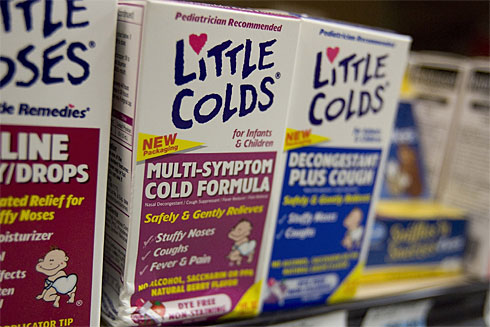
About 5% of patients like these under age 2 had the drugs in their urine, says Raymond Pitetti, associate director of pediatric emergency medicine at Children’s Hospital of Pittsburgh. None of their parents, however, admitted to giving the children medication or taking the cold products themselves, which could cause the drugs to pass into breastmilk.
Pitetti says his study — in which doctors performed toxicology tests on 274 children at the Pittsburgh hospital between 1997 and 2006 — strongly suggests that the cold medications caused the life-threatening events, in which the babies turned red or blue, stopped breathing, passed out or went limp. Although Pitetti says he can’t rule out that something else caused these symptoms, he notes that the ingredients in cold medications can make babies stop breathing.
"In that first month of life, their breathing systems aren’t very developed yet," Pitetti says. "They’re very susceptible to harm, even at very low doses."
Based on his study, Pitetti says emergency room doctors should perform toxicology tests on all children with these symptoms.
Mothers shouldn’t take cold medications while breastfeeding, Pitetti says. If mothers must take these medications, they should refrain from nursing for 24 hours, giving their babies formula or previously pumped breastmilk instead. To prevent accidental overdoses, people should keep a log of all medications, including common pain relievers such as Tylenol, given to babies. That can help both parents or other caregivers avoid giving a second dose too soon, especially if more than one person is caring for the baby.
In January, the Food and Drug Administration recommended that over-the-counter cough and cold medicines should not be given to children under age 2 because of the risk of "life-threatening side effects." According to the American Academy of Pediatrics, cough and cold products may pose serious risks in these children, including death, convulsions, rapid heart rates and reduced levels of consciousness. Manufacturers have voluntarily withdrawn cough and cold products for children under age 2.
In October, an advisory panel to the FDA noted that these products aren’t effective in children under age 6 and shouldn’t be given to children that age.
About 7,000 children under age 11 — including 1,500 under age 2 — go to hospital emergency rooms each year after taking cold and cough medicines, according to the Centers for Disease Control and Prevention. About two-thirds of these children took the medicines without a parent or caregiver nearby. A recent CDC study found that cold and cough medicines caused the deaths of three babies under age 6 months, found dead in their homes, in 2005.
Pitetti says his study — in which doctors performed toxicology tests on 274 children at the Pittsburgh hospital between 1997 and 2006 — strongly suggests that the cold medications caused the life-threatening events, in which the babies turned red or blue, stopped breathing, passed out or went limp. Although Pitetti says he can’t rule out that something else caused these symptoms, he notes that the ingredients in cold medications can make babies stop breathing.
"In that first month of life, their breathing systems aren’t very developed yet," Pitetti says. "They’re very susceptible to harm, even at very low doses."
Based on his study, Pitetti says emergency room doctors should perform toxicology tests on all children with these symptoms.
Mothers shouldn’t take cold medications while breastfeeding, Pitetti says. If mothers must take these medications, they should refrain from nursing for 24 hours, giving their babies formula or previously pumped breastmilk instead. To prevent accidental overdoses, people should keep a log of all medications, including common pain relievers such as Tylenol, given to babies. That can help both parents or other caregivers avoid giving a second dose too soon, especially if more than one person is caring for the baby.
In January, the Food and Drug Administration recommended that over-the-counter cough and cold medicines should not be given to children under age 2 because of the risk of "life-threatening side effects." According to the American Academy of Pediatrics, cough and cold products may pose serious risks in these children, including death, convulsions, rapid heart rates and reduced levels of consciousness. Manufacturers have voluntarily withdrawn cough and cold products for children under age 2.
In October, an advisory panel to the FDA noted that these products aren’t effective in children under age 6 and shouldn’t be given to children that age.
About 7,000 children under age 11 — including 1,500 under age 2 — go to hospital emergency rooms each year after taking cold and cough medicines, according to the Centers for Disease Control and Prevention. About two-thirds of these children took the medicines without a parent or caregiver nearby. A recent CDC study found that cold and cough medicines caused the deaths of three babies under age 6 months, found dead in their homes, in 2005.